
Liss Fenwick
Oceania – Presented by Antares Wells
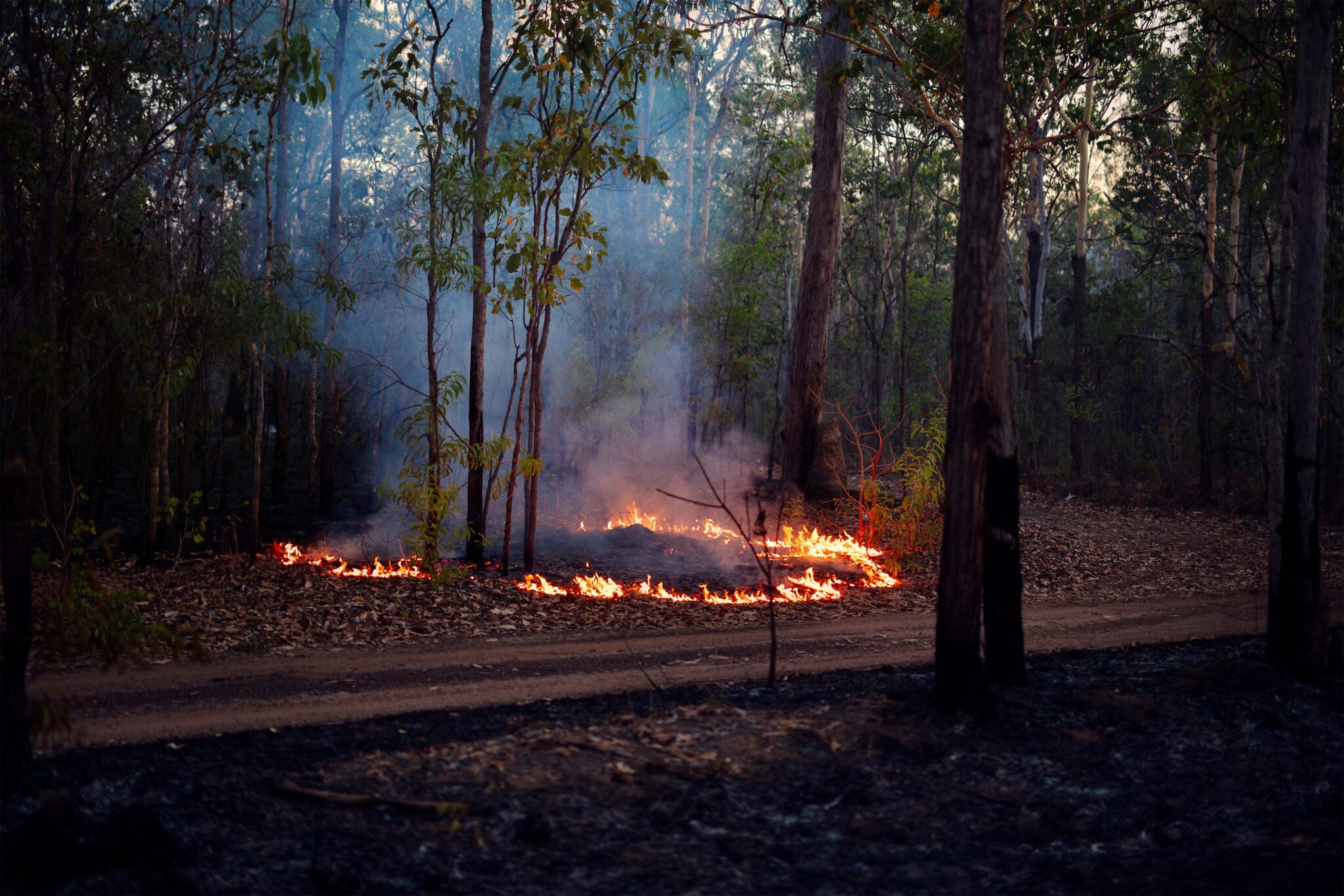
© Liss Fenwick, Humpty Doom
Statement
For over two decades, Liss Fenwick has photographed life in Humpty Doom, a rural town in Australia’s Northern Territory. Through her photographs, something dark and subterranean comes to the surface – the psyche of a country that has consistently struggled to meaningfully connect to Aboriginal land since the violent colonisation of 1788, and continues to relentlessly exploit the environment at its peril. Ominous, richly textured and at times darkly comic, Liss Fenwick’s photographs evoke the underside of a country mythologised in sun and sea, and the ways the twin forces of colonisation and climate change inscribe themselves in the land and its people.
https://www.lissfenwick.com/


Rather than presenting the savannah as backdrop, I treat its elements as protagonists: termite mounds lit like studio models and pandanus trees rendered monumental. This playful, stylised language disrupts stereotypes of the “rough rural town” while acknowledging the deeper ecological and colonial tensions that define the region. Humpty Doom is, ultimately, an attempt to see my home clearly at a time when its future is increasingly uncertain.

Liss Fenwick (Darwin, Australia, 1989) lives and works between Larrakia Country (Northern Territory) and Naarm (Victoria). Her practice engages photography, video, sound and material processes to examine the fragile entanglements between ecology, culture and colonial history, particularly in Australia’s tropical north, one of the nation’s fastest-warming regions and a place increasingly projected to become unsafe, even uninhabitable, under future climate conditions.
Fenwick’s work has been exhibited widely, including at the Centre for Contemporary Photography, MARS Gallery, and the Northern Centre for Contemporary Art. Her photobook Humpty Doom (Bad News Books, 2023) was shortlisted for the Aperture Paris Photo First Photobook Award and the Libraryman Award. Her work has been presented at major international festivals and institutions, including the Rencontres d’Arles and the Victoria and Albert Museum (V&A Museum). It has also been recognised through significant Australian art prizes, notably the Macquarie Emerging Art Prize and the Fineman Award.