
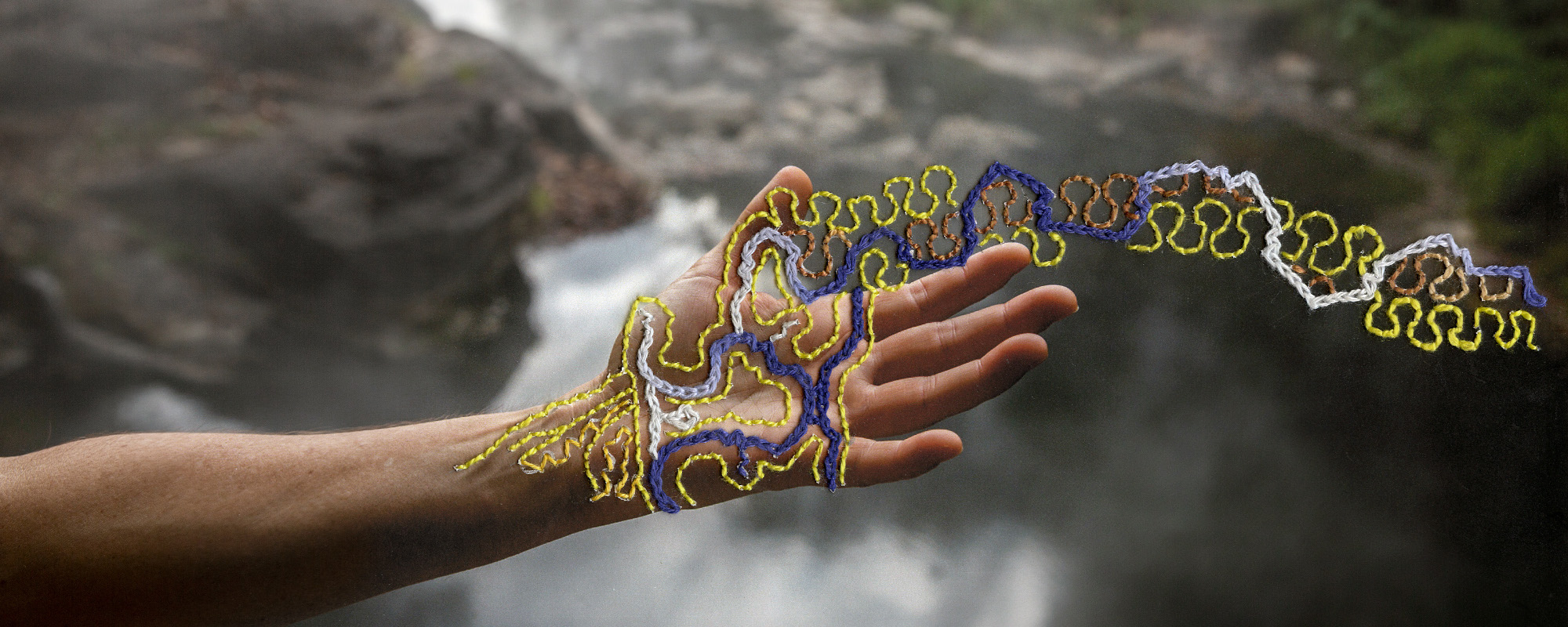
© Ana Elisa Sotelo & Sadith Silvano, Petition to the plant spirits, Portraits of the Multiverse
THINKING SUSTAINABILITY
Thinking Sustainability is a bold programme created in 2024 by Audrey Bazin, Artistic Director of the Louis Roederer Foundation, and designed to respond to the ever-changing perspectives and situations related to sustainability and habitability.
Initially, this international programme was built around two key directions:
– The Thinking Sustainability Prize, which rewards a photographer who tackles an issue linked to sustainability through the prism of natural sciences or humanities.
– The Thinking Sustainability Research section, which brings together a collection of texts by thinkers and researchers from all over the world, whom the Foundation has invited to write on the subject of their choice.
These fascinating, freely accessible photographs and research projects are produced around the world by people committed to improving understanding of environmental and social issues. Through their expertise, they provide us with food for thought and pave the way for possible changes, whether in the natural sciences or the humanities.
To ensure a diversity of viewpoints, each edition of Thinking Sustainability entirely renews its nominators, the members of the Photography Prize jury, as well as the thinkers and scientists involved in the Research component. All are selected for their unique voice and vision and the fresh perspectives they bring, often distinctly separate from those usually put forward. These voices, whether emerging or established, enjoy complete freedom to explore their chosen subject, nominate a photographer they wish to champion, or vote for the work they wish to support. In this way, the programme reveals a rich diversity of photographic perspectives and deeply inspiring texts. The Louis Roederer Foundation is proud of these carte blanches, which guarantee freedom of expression and visionary thinking.
The Thinking Sustainability programme evolves from one edition to the next, as research and creative work move forward. By 2026, the programme will be expanded to include the Residency and Involvement components, which will open it up to collaborations and practical initiatives in support of life and biodiversity.
If Thinking Sustainability Residency – developed in partnership with the Camargo Foundation – invites an American thinker to spend time in residence in France and share their intimate relationship with nature, Thinking Sustainability Involvement – developed in partnership with the World Monuments Fund and Domaine du Rayol – actively commits the Foundation to raising awareness and preserving living heritage, particularly among younger generations.
The aim is to contribute to an in-depth reflection on sustainable development, offering solutions and reasoning to anyone who is curious and keen to better understand the issues at stake on a large scale.


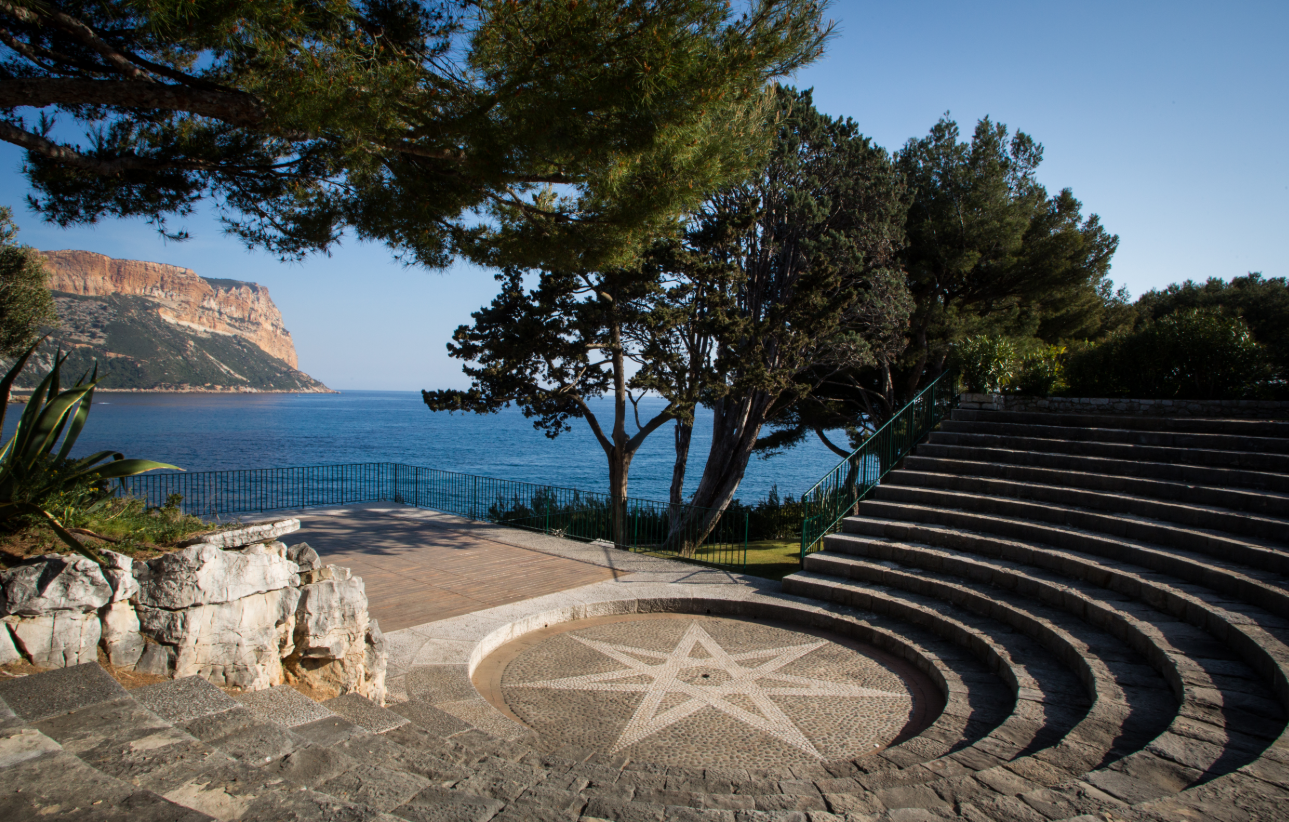
© Fondation Camargo
THINKING SUSTAINABILITY RESIDENCY
In order to open the Thinking Sustainability programme to a more sensitive and poetic dimension, the Foundation launched in 2026 the writing residency “Habiter le monde” (Inhabiting the World), inviting an author to write a text exploring their intimate relationship with the world, in partnership with the Camargo Foundation.

© Domaine du Rayol
THINKING SUSTAINABILITY INVOLVEMENT
In 2026, the Louis Roederer Foundation inaugurated an Involvement component dedicated to initiatives supporting the living world and biodiversity. The Foundation supports programmes aimed at preserving and transmitting the heritage of historic gardens, as well as educational initiatives designed to raise children’s awareness of biodiversity and its preservation.
Conversation with Audrey Bazin,
Artistic director of the Fondation Louis Roederer
Audrey Bazin

© gkayacan
You launched the Thinking Sustainability programme in 2024.
What was the guiding spirit behind its creation?
A photography prize related to sustainability had existed since 2021, but I wanted to rethink it by creating a much broader programme, commensurate with Louis Roederer House’s historic commitment to preserving biodiversity and, by extension, the Foundation’s. This international programme is intended to be sincere and demanding. It was initially structured around two main focuses:
– The Thinking Sustainability Prize rewards a photographer who tackles an issue linked to sustainable development, through the prism of natural sciences or humanities.
– The section, Thinking Sustainability Research, brings together a selection of essays by thinkers and researchers from around the world who have been given free rein by the Foundation.
The aim is to contribute to an in-depth reflection on sustainable development, offering solutions and reasoning to anyone who is curious and keen to better understand the issues at stake on a large scale.
How is the Thinking Sustainability Prize organised?
I spend several months assembling a jury and selecting nominators who differ from those typically involved in photography awards. I seek out new voices as well as recognised reference figures. The jury, whose members must be interested in sustainability issues, is composed of French and international figures: photography specialists, as well as personalities from the worlds of cinema, literature and philosophy, together with directors of cultural institutions, ensuring a cross-disciplinary perspective on the candidates’ submissions.
The nominators, all photography experts, must represent all continents (with America divided into North and South). Each must originate from, or have lived for at least five years on, the continent they represent, in order to guarantee an in-depth knowledge of the local cultural ecosystem. Each nominator has three months to select three photographers from the continent they represent (or where they have lived for at least five years), inviting reflection on sustainability within their region.
The jury then has three months to review the 54 applications. Each member votes for a preferred artist per continent, and subsequently for the overall laureate among the six finalists.
The prize is endowed with €8,000. The winner’s photographic series is accompanied by a critical text written by an art historian from the same continent.In the interest of fairness, each of the five finalists also receives €1,000.
The awards ceremony takes place in Paris, in a place that I am particularly fond of, an epicentre of creation and reflection: the Institute for Ideas & Imagination.
What about the international research component, Thinking Sustainability Research?
The sustainability we imagine is linked to our experience, which is necessarily local. It cannot be the same in Brazil, Senegal, India, Australia or Japan. I asked researchers to write on the subject, choosing one representative from each continent. They were all given carte blanche.
For each edition, new fields of research and reflection are highlighted to demonstrate that thinking about sustainability and habitability concerns every discipline and every scale, from the local to the international.
True to its mission of transmitting knowledge, the Foundation publishes all the finalists’ texts and photography projects on its website. Making the entire Thinking Sustainability programme freely available means we can offer these new perspectives on sustainability to as many people as possible.
Is the programme intended to evolve? What distinguishes the second edition in 2026?
The project was designed for the long term. It needs to be in a state of perpetual development, just like our thoughts, which are always on the move. In 2026, we wanted Thinking Sustainability to reach a new stage by expanding with two complementary components, both reflective and engaged.
Thinking Sustainability Residency – “Habiter le monde” (Inhabiting the World) was born from our desire to open the programme to a more sensitive and poetic dimension. Developed in partnership with the Camargo Foundation, an internationally renowned residency based in Cassis in southern France, this residency invites a thinker – an American writer – to explore, through writing, their intimate relationship with the world.
Unlike the Thinking Sustainability Prize and Research components, which are grounded in scientific work, Habiter le monde gives space to experience, perception and imagination. Hosted for three weeks at the Camargo Foundation’s property in the heart of the Calanques National Park, the author will produce a text to be included in the programme’s publication.
The second component, Thinking Sustainability Involvement, extends this reflection through action. The Foundation aims to commit to concrete initiatives for the protection and transmission of the living world. This includes supporting the World Monuments Fund through an international programme dedicated to adapting historic gardens to climate change, as well as contributing to the educational programme of Domaine du Rayol – a historic garden designed by Gilles Clément – which focuses on raising younger generations’ awareness of biodiversity and its preservation.
Beyond the quality of the projects developed by these two organisations, the aim is to extend the Foundation’s reach both internationally and regionally, in a continuous dialogue between thought, creation and action.