
Building a sustainable city ourselves. Learning from the principles of sustainable development rooted in African cities.
Translation in English
Today, Africa is the continent experiencing the greatest demographic growth, with increasing
urbanisation. According to OECD projections, by 2050 the African continent will be home to
950 million new city dwellers1-2. At a time when the world has become aware of climate
change, the limits of fossil fuels and above all the need to rethink our modes of consumption
and production, human settlements in Africa will become the place where tomorrow’s world
production will be played out.
African cities were built by colonial and post-independence planning policies, which
replicated Western urban paradigms and often failed to accommodate unique African
lifestyles and anticipate demographic growth. This can be seen in the repeated flooding
of African capitals and the persistence of intra-urban shanty towns. Out of necessity and
pragmatism, the residents have developed an attitude of adaptability, resilience and
inventiveness that is a rich source of lessons for building the sustainable city of
tomorrow. These forms of vernacular architecture and endogenous knowledge tell us
about the principles of saving, adaptability, resilience and empowerment drawn from our
traditional and contemporary cultures.
THE BUCKET AND THE FIGHT TO SAVE WATER
The issue of water management is critical, whether in a context of desertification and increased drought, or of heavy rainfall and flooding, which we are seeing more and more. More than 300 million people have no access to drinking water3. Water cuts are part of everyday life for many Africans, including capital cities and metropolises. As a result, African households use buckets (or basins) as essential items in their daily lives. This tool is used to measure and control the amount of water used. A person can shower with 7 litres of water, wash dishes with 6 litres of water, flush the toilet with a 10 litre bucket and wash clothes with 20 to 30 litres of water. With 40-50 litres of water a day (half of
which doesn’t need to be drinkable), we can more than cover our daily needs. Compared with the average water consumption of 450 litres per person per day in the United States or 150 litres per person per day in France4, African city dwellers have already adopted measures that would help to reduce water stress on a global scale. It remains important to protect water resources and adopt a no-waste policy for domestic and personal use, so that our water resources can be deployed in more critical areas linked to subsistence, such as non-intensive agriculture, livestock farming or the medical field.
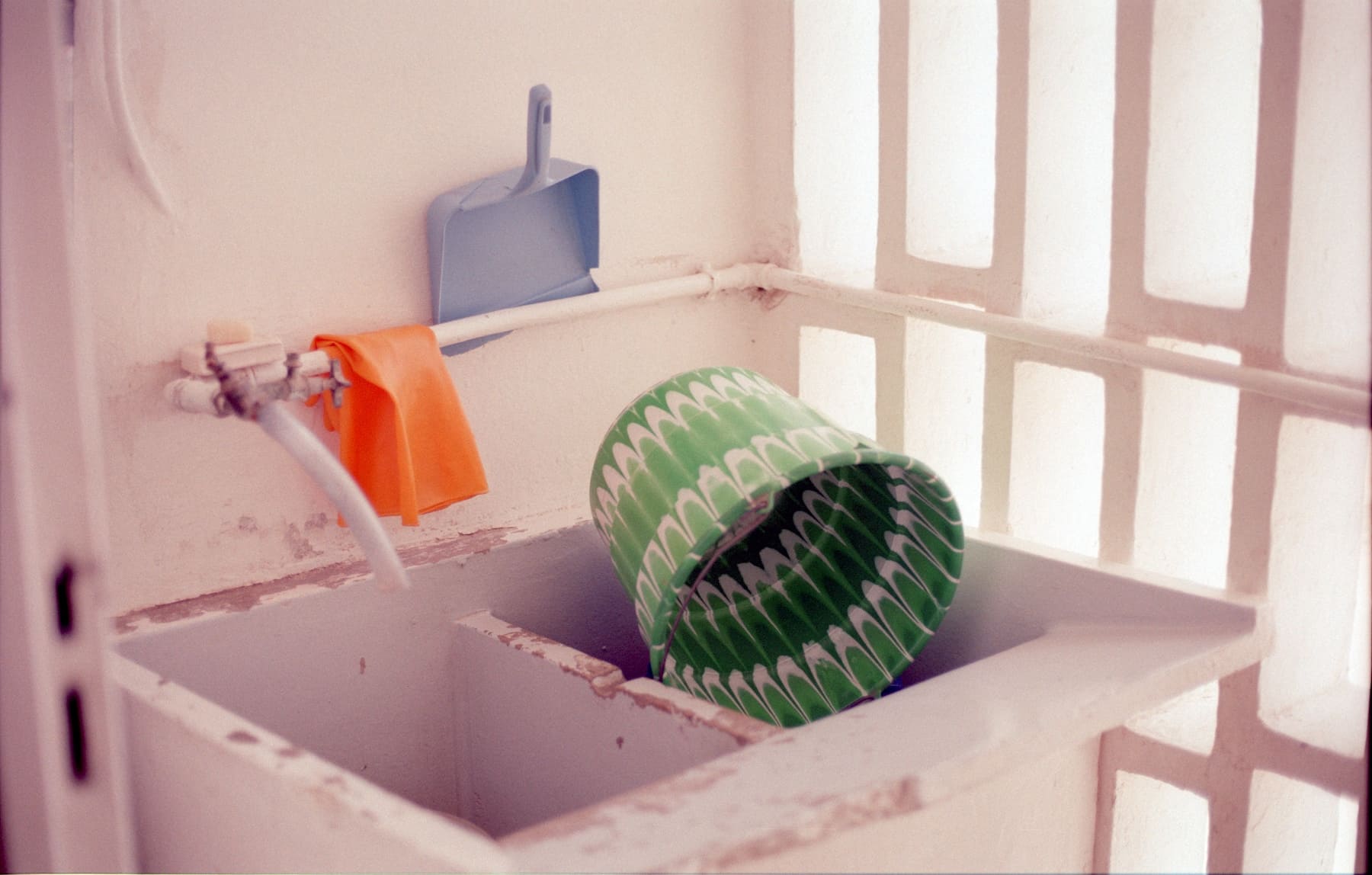
Le seau. Habiter Dakar, 2022 ©Katia Golovko
THE CARETAKER’S CHAIR AND THE CULTURE OF REPAIR
The culture of reuse, recycling and repair can be seen on a daily basis in African cities.
With the culture of industrial manufacturing still in its infancy5, many everyday
accessories are imported. Given this context and the precarious economic situation, the
culture of repair and reuse is a way of extending the life cycle of an object. This
caretaker’s chair (pictured below) shows how a simple plastic chair has been reinforced
with wood to make it more robust for permanent use.
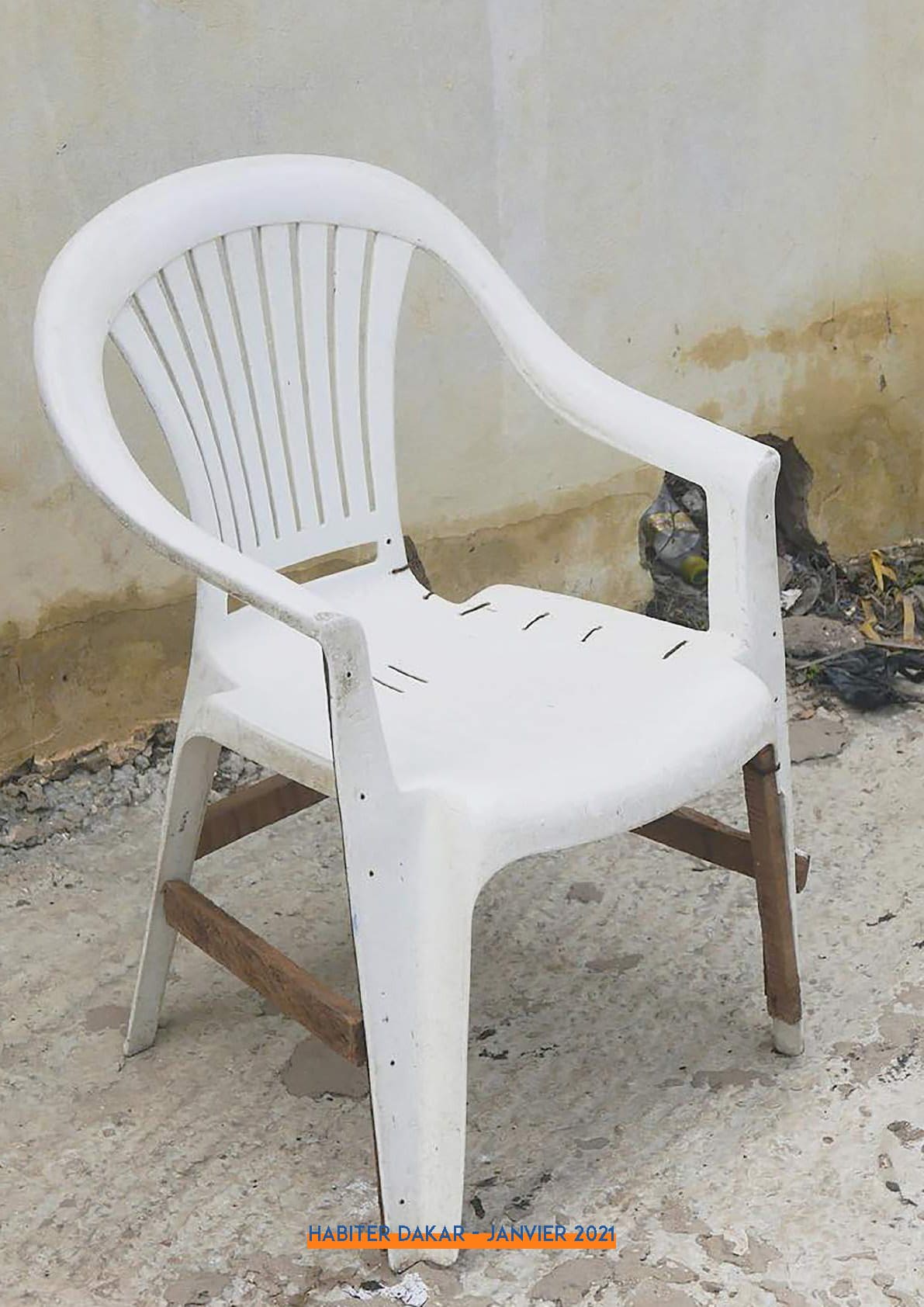
Chaise de gardien. Dakarmorphose et Habiter Dakar, 2017 ©Nicolas Rondet
There are many transformed and adapted objects that not only put us in a circular
economy, they also demonstrate the ingenuity born in a context of scarce resources and
optimisation of the existing.
This example leads us not only to question mass consumption, but also the dependence
of African countries on imports of products from abroad. Over and above the production
of material goods, the issue of maintenance has a major impact on our carbon footprint,
so the ability to repair or transform should become central in our consumption patterns
to avoid the mass importation of single-use products (certain types of plastic) that will
end up in landfill sites, contributing to pollution and greenhouse gas emissions.
This creative frugality must also extend to the construction sector, which is responsible for
almost 42% of greenhouse gas emissions worldwide6. Dominated by concrete, the rampant
urbanisation of African cities is forcing us to think about alternative ways of reclaiming
space that are more respectful to the environment while putting people back at the centre.
THE WOODEN HUT: URBAN VERNACULAR AND THE MULTITUDE OF MATERIAL RESOURCES IN THE CITY
The vernacular architecture of Senegal as presented in the book L’habitat traditionnel au Sénégal: Etude de l’habitat rural7 shows a variety of traditional housing types built using local materials such as straw, stone, earth and wood for the structural elements (framework, floors). The wooden hut does not feature in Senegal’s traditional (pre-colonial) buildings, although it did appear at the beginning of the 20th century in former colonial capitals such as Saint Louis and Dakar8.
These wooden huts are a type of accommodation for Africans/ indigenous people (in the Medina district of Dakar, for example) and for workers looking for work. They are made of wood from crates used in rail transport and roof tiling. The materiality of these huts echoes the traditional vernacular in its use of local materials, in this case salvaged materials to meet a specific demand for housing in an urban context. These houses were built by the residents and were even often physically moved during eviction policies. Shacks are still springing up on empty plots of land, occupied by disadvantaged people who can erect them in a day or two. A 2.5m x 3m hut costs between €200 and €250,
including transport and assembly. This trend towards recycling can also be seen in the demolition of buildings, where aluminium window and door sections are recycled and fed into a cast-iron industry that turns them into cooking pots and utensils. The same applies to steel frameworks for reinforced concrete and brass pipework, recycled in production units in the city of Dakar. Recovering and recycling create real urban economies that reduce waste production and see opportunities in the infinite possibilities for transforming materials. In this way, the city is an infinite resource where supplies change but the dynamics of transformation are perpetual, making construction part of our virtuous life cycles.
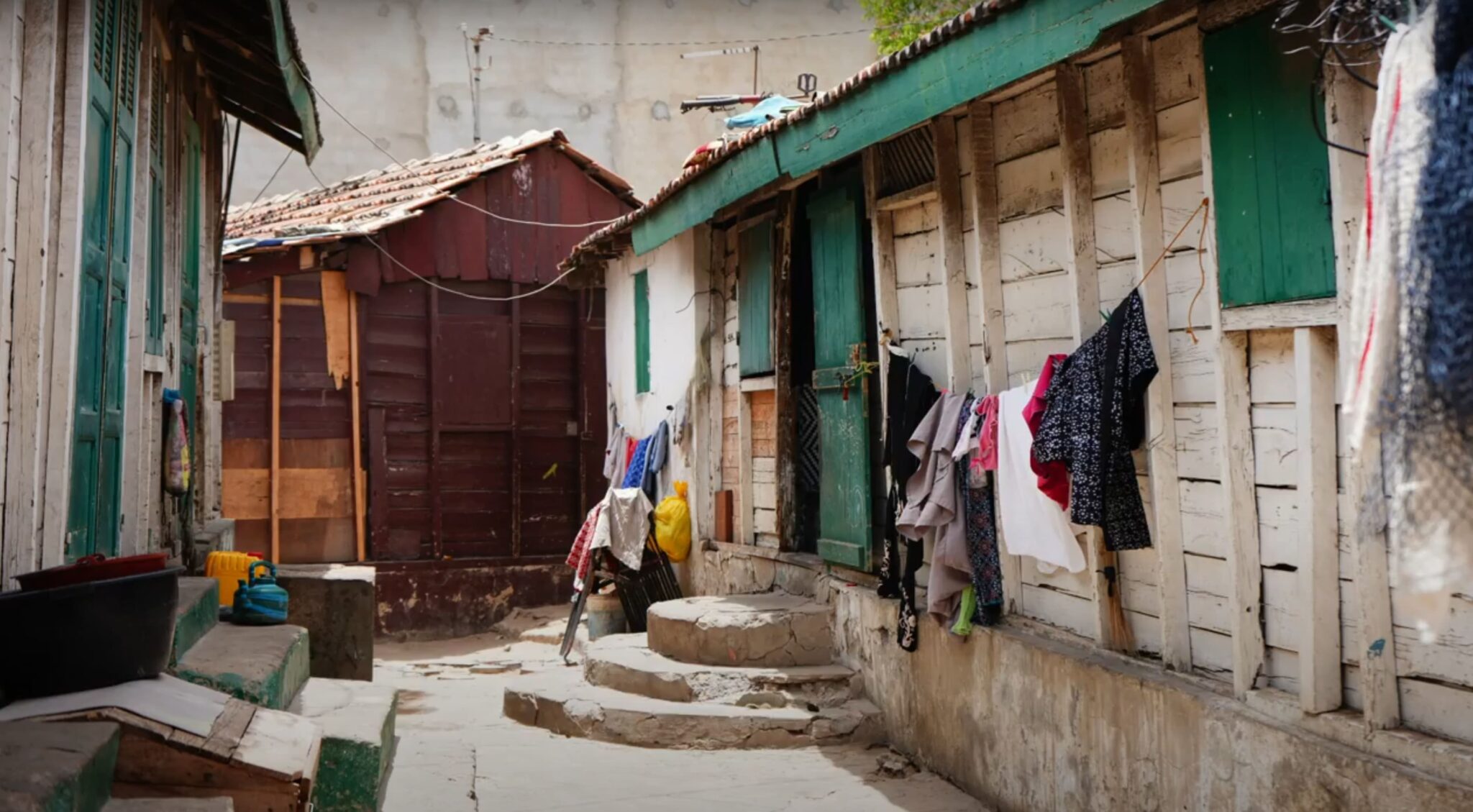
Credit: Wooden huts. Medina Dakar, 2022
EARTH CONSTRUCTION: AN ANCESTRAL TECHNIQUE FOR HOUSING PEOPLE
While life-cycle analysis in the construction industry gives great credit to recovery and recycling, the fact remains that many recycled materials, such as plastic, aluminium and steel, have a high grey energy content and are not originally produced in Senegal or other African countries in the sub-region. To be resilient when facing climate change, it makes more sense to look to biobased construction materials. In Senegal, as in many other African countries, it is rare to see earth-built buildings, and the perception of many is that this material is confined to the rural world or to the past. The cob technique, for example, involves making balls of damp earth by hand and tamping them down according to a plan to make layers 40-50cm high which are dried in the sun for five days, waiting for the next weekend when an extra layer is added. After four weekends, the wall is 2 m high and the lintels for the doors and windows, with the rowan tree cut to size, are installed. One or
two layers later, the roof framework can be laid and the rice straw is then put on top for the thatched roof. Far from the cities, earth building traditions have been preserved in some parts of the country, and can be adapted to modern typologies. Far from resembling the traditional impluvium hut, these constructions use the same ancestral technique; this guest house with its rectilinear walls is built with materials and labour found on site. Above all, it allows residents to regain their self-determination by shaping their own homes using natural materials that can be reused, creating buildings that are better suited to the tropical climate. By building it with their peers, the expertise is passed on, enabling them
not only to replicate ancestral techniques but also to maintain their homes.
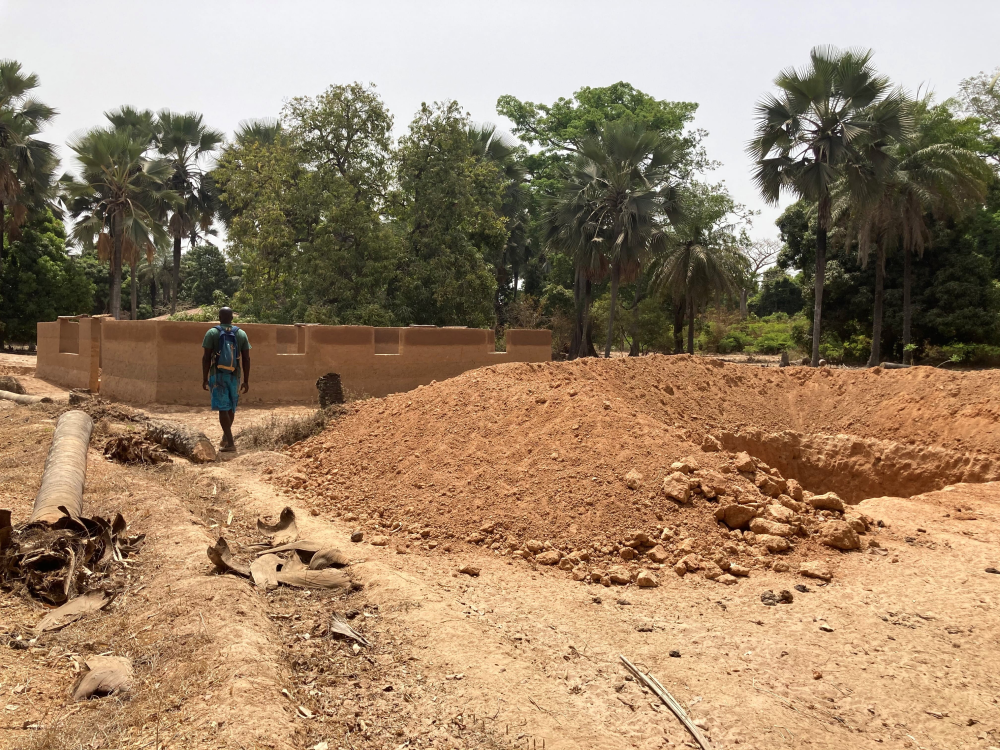
Chantier d’une maison d’hôtes en bauge par Worofila. Casamance, 2021 ©Nzinga B. Mboup
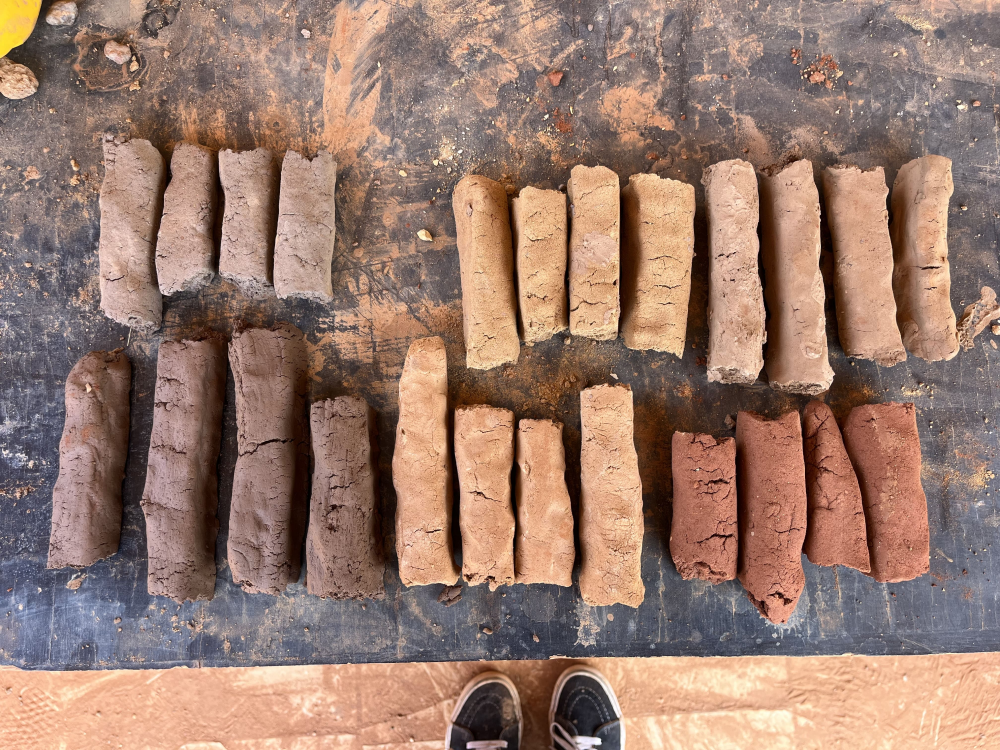
Test de cigares de terres argileuses par Worofila. Sénégal, 2024 ©Oumar Sanoko
CLAY CONSTRUCTION WORKSHOPS AND THE DEMOCRATISATION OF SKILLS
In recent years, there has been a boom in raw earth construction, with various architects contributing to the production of buildings in raw earth and other bio-sourced materials within the city itself. Although this helps breakdown the perception that earth is not a rural material, these buildings are constructed using techniques that are not available to everyone. Making compressed earth blocks (CEB), the technique most commonly used in these examples, requires a well-calibrated press.
This year, we have been working to set up clay apprenticeship workshops to help teach the technical skills for designing and constructing buildings using geo (earth) and biosourced (plant fibre) materials. During the workshops, participants are exposed to thediversity of soils in terms of colour, grain size and plasticity. They are shown the various tests used to characterise these different types of earth before determining their uses, which range from making adobe bricks to applying plaster for construction. The clay soils were sourced less than 60km from Dakar, notably in the town of Sébikhotane. The same applies to typha, an invasive aquatic bulrush that acts as a thermal insulator, sourced from lakes just outside the capital. These workshops focus on learning about clay by observing the material and using all the senses – sight, smell and touch – to determine the properties of clay. The analysis of these clays according to their plasticity and degree of humidity determines their use in construction and allows great adaptability, depending on need and availability. For example, if you notice cracks in a rendering made with clay that is too rich, you can easily correct them by adding fibre or sand to the mixture. Before we get the right balance, we go through an iterative process that calls on our intuition and empiricism, and ultimately nurtures reflexes of good practice.
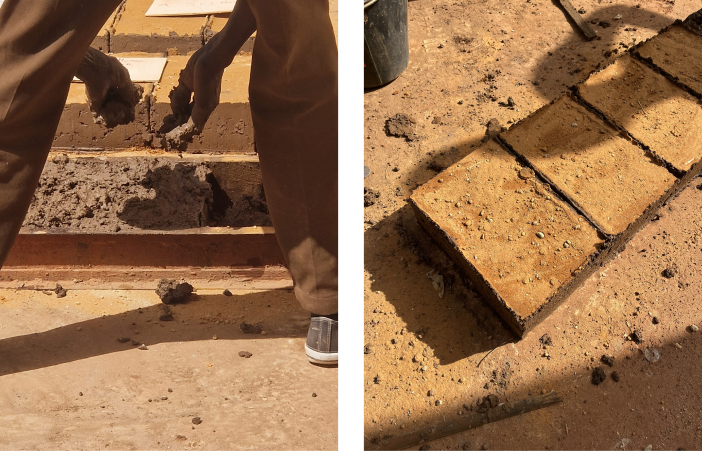
Fabrication d’adobes par Worofila Sénégal, 2024 ©Oumar Sanoko
The adobe technique and earth plasters do not require any specific machinery, just the
usual tools such as buckets, trowels and moulds. The clay in the bricks is not stabilised
(unlike CEB) and can be reused as often as required. These low-tech techniques have real
potential for democratisation.
CONCLUSION
How can we build the African city of tomorrow so that it is adapted to the realities of itsinhabitants without compromising the well-being of future generations?
This challenge urges us to adopt lifestyles that do not waste the resources we have, and
to draw inspiration from our urban and rural histories, which are rich in examples of
inventiveness and use of local, less polluting materials. Ancestral knowledge can be
passed on in the urban context, and it is up to us, as architects and African citizens, to
think about virtuous and democratic construction models so that the inhabitants can take
ownership of the city and maintain it. To achieve this, the models must draw on the
collective intelligence that has produced solutions that are already evident in our daily
lives. The youngest continent’s culture of resilience, adaptability and creativity, centred
on people as agents of their environment, are the best tools for working towards
sustainable development.
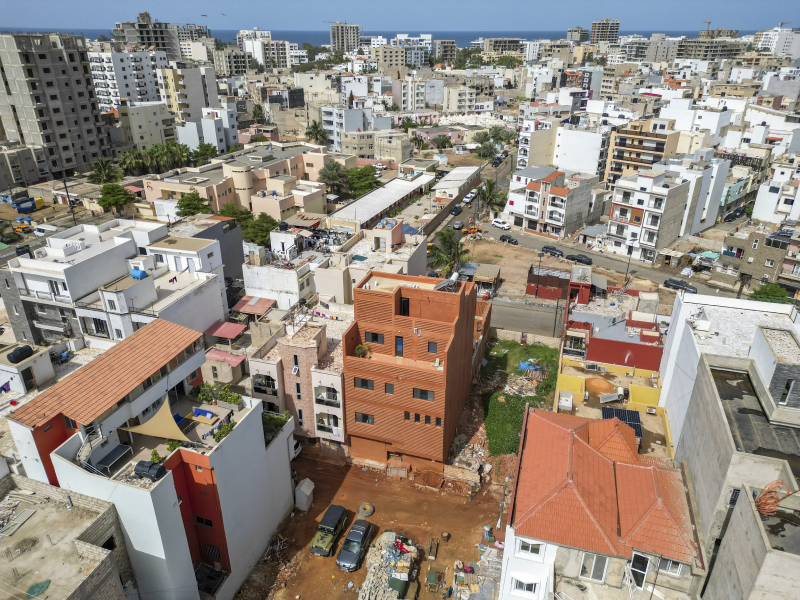
Maison en terre à Dakar, conçue par Worofila. Sénégal, 2023 © Sylvain Cherkaoui
- Africa’s Urbanisation Dynamics 2020 (2020) Published by OECD
- Mae-ling Lokko, Frederick Wireko Manu, Nzinga Mboup, Mo- hamed Aly Etman, Marco Raugei, Ibrahim Niang, Kingdom Ametepe, Rosemary Sarfo-Mensah. Comparing the whole life cycle carbon impact of conventional and biogenic building materials across major residential typologies in Ghana and Senegal, Sustainable Cities and Society, Volume 106, 2024
-
Bazié, J. (2014). Accès à l’eau : l’Afrique entre abondance et pénurie. Après-demain, 31-32, NF, 28-29.
https://doi.org/10.3917/apdem.031.0028
Consommation domestique en eau potable –Notre-environnement. République Française
https://www.notre-environnement.gouv.fr/themes/ societe/le-mode-de-vie-des-menages
ressources/article/consommation-domestique-en-eau-potable
«Between 2011-2013, manufactured products accounted for just 18.5% of exports, while 62% of all
imports were manufactured products». African Development Bank Group. https://www.afdb.org/fr/the-high-5/industrialize-africa -
R. Crawford, Life cycle assessment in the built environment, Taylor & Francis (2011)
https://www.architecture2030.org/why-the-built-environment/ -
Dujaric P, L’habitat traditionnel au Sénégal : Etude de l’habitat rural, Ecole d’Architecture et
d’Urbanisme de Dakar, 1976 -
Saint Louis was the capital of French West Africa between 1895 and 1902, and Dakar from 1902 until
1960, the year of independence.